 Back to Peter
Lehmann Publishing
Back to Peter
Lehmann Publishing
Not on the Agenda – Clients and Psychiatry in Central Europe
Introduction
As a result of happy circumstances my son Stefan and I had the opportunity of making a study trip through Central Europe. This study trip could not have taken place without the great hospitality of members of the board of the European Network Users Survivors Psychiatry. My son and I were guests of Peter Lehmann (Berlin), Gábor Gombos and his wife Kathy (Budapest), Piotr Iwanejko (Cracow) and Vahid Dulovic (Tuzla).
This hospitality, the kindness, the music, the quality of food, the life-power, the cheerfulness of these people, their families and their friends turned our journey into an unforgettable, special and impressive experience. At the same time being ignorant and naive people from Western Europe we were touched by great sufferance and shocked by the depth of the suffering in these countries.
At several moments during our trip we experienced a deep feeling of powerlessness when confronted with the misery and awful circumstances under which not only psychiatric patients lived, but whole groups of people. That is the reason we find it a moral duty to tell about the things we've seen, so that as many people as possible are informed about the situation of our Eastern Europe neighbours. And our friends over there specifically urged us to tell their stories.
1. Clients are active everywhere
Everywhere in Europe under difficult circumstances and with no or very few means, clients are helping each other to be independent, to have a vision and to fight for their rights These organisations of patients have the very important task to democratise psychiatry and society and most of all to fight for their human rights.
In Central Europe the Hamlet Trust is doing good things. This Trust has realised extremely important projects.
Nowadays there is a new organisation MHID, what is doing the same work as Hamlet Trust and wahet exists out of some of the professionals of Hamlet Trust.
And besides these activities there are patients who are drawing and painting, proudly making exhibitions of their work. In order to show these works to other people in Europe and to give other patients the opportunity to do the same, we have started a website on the European Network and so we built an Art Gallery.
2. Mutual solidarity
We did not only experience impressive activities by clients, but also by managers, psychiatrists, nurses and social workers. In Hungary for instance we were given an enthusiastic excursion by a manager of a social pension. This man booked very important results with scarce means in making a large scaled institution in small parts.
Striking was the proud with which all people spoke about their work, the booked results and the results booked by their clients. Where both clients and professionals were working with very little it seemed that sometimes this shared poverty created a mutual solidarity between professionals and clients. This solidarity we are often missing in the Netherlands, I feel.
Because most people depend on their family due to the lack of welfare the hospitality was overwhelming. So overwhelming we were surprised and impressed by it. At the same time there is corruption at a large scale. Where there are few social services and social securities and everyone depends on the support of friends and family under difficult circumstances, everyone tries to get money out of corruption. In relation with this we impressed by plans of self help organization Fenix in Tuzla to earn money with self made souvenirs, furniture and biologically breed plants and herbs to be financial independent.
3. Genocide
Genocide is a fundamental European problem that is lacking an answer. One of the most shocking things to realise during our journey is that there has come an end at Auschwitz-Birkenau, but that genocide in Europe never ended. We were in Auschwitz and were deeply touched by the enormous desolate and extendedness of Birkenau. And the extermination of the Jewish people was only the beginning, after that it was the turn of the Slavish people to be exterminated.
Genocide is as much older than Auschwitz. We spoke in Auschwitz with an Irishman, who said that British people in the 19th century set out to starve the Irish people. Several millions died.
We know that in Turkey during World War I genocide was being committed to the Armenian people. We also know about the role Belgium played in Rwanda. We know about Bush not having any problem with wearing a cowboy uniform. (How many Indians were killed by cowboys?) And In Bosnia we saw with our own eyes the results of genocide in Srebenica, coming September 2005 exactly ten years ago.
In relation to psychiatry we heard stories about a clinic in Bosnia where the Serve management killed who or three hundred patients who were not Serve (Sokolac).
The stories about Srebenica and Sokolace us realise that in Europe genocide is still being executed. Therefore we propose to change the slogan: "Never again Auschwitz" into "When shall make an end to practices like Auschwitz?"
We are not the only ones who make this comparison. There are reports about Dutch soldiers who were right-extremists, brining Hitler greetings and getting enthusiastic about the Nazis and what they did.
They also voluntarily helped to kill Muslims. There are even rumours (unbelievable, but strong) that Dutch soldiers gave sweets to Muslim children with the purpose to kill them.
4. Nazi Euthanasia
Commitment to genocide is a black page in the history of psychiatry and the medical sciences.
The idea of systematically killing the Jews was given to the German Nazi's by doctors and psychiatrists and started with the mass murder of patients and people with learning difficulties and physical defects.
The biological medical model was combined with a social-Darwinist politics and thoughts about cost savings. This combination greatly contributed to the catastrophe and we should be aware of the fact that elements of these ideologies are still alive today.
Better than to repress and trying to forget one should strive to process these histories. We should all realise that genocide and Auschwitz can happen tomorrow again seeing that the factors causing the rise of these things are still existing. A fine example of the way to deal with history and traumatic experiences is the monument on the grounds of the psychiatric hospital in Cracow. It was given to the hospital by the Germans. On the monument the names of all the murdered psychiatric patients and the psychiatrists, who stood by the patients, are listed. Each year patients have a memorial service. As 'Wiedergutmachung' the Germans also built a house for the rehabilitation of patients, allowing for them to reintegrate into society. The dorms do not contain the usual twenty beds but are designed for two or three patients and some rooms even facilitate a computer.
5. Neo-liberal misery; social euthanasia?
The Social Darwinist way of thinking (for a part family of neo-liberal thinking) in combination with a refusal to give enough money results into a world wide kind of social euthanasia.
In Eastern Europe clinics do not have enough money to give help in an adequate way. We have heard stories about a high morbidity rate of fifty percent during the first year of hospitalisation as result of cold and unhygienic circumstances, flack of food, poverty and a shortage of medicine. New medicine are too expensive and sometimes even the old medicine are not available...
In Hungary there are thousands of psychiatric patients housed in social pensions. These people do not have enough money to live outside these social pensions. Even in rich countries as the Netherlands there is not enough money spent allowing for chronically psychiatric patients in the hospital to have quality of life. (See Report "a long chain of empty Sundays."). Ray Rowden , former director of Hamlet Trust speaks about psychiatric hospitals in Eastern Europe as "Death camps, where they are killing people..." Also Clemens Huitink, spokesman of the Organisation for Mental Health Care Institutions in the Netherlands describes a bad situation. For interested people at www.poianamare.org you can see photo's about a situation in a psychiatric hospital. At www. mdri.org you can see the situation in Paraguay. Even still worse...
6. Stalinism
Under Stalinism psychiatry was a part of the ruling system. The biological medical model dominated.
Psychotherapy and psychoanalyse were stigmatised as western bourgeois inventions and were forbidden, because it was dangerous to talk with other people. It was quickly seen as subversion. As a result people could stay in hospitals for years and being exposed to series of electroshocks without having any possibility to speak out. We know one lady who experienced this for two years. And a man, who was forced to take anti-depressive medicine, said that he would do so, if he got also a kind of psychotherapy.
He was send to a body movement therapy. He spoke two minutes about his problems and then the therapist started to talk about the problems in her own marriage. After two months he refused to take his medicine because he was denied psychotherapy and talked about the situation. When he came back to the physiotherapist, she cried and said, that she did not know anything about psychotherapy, but was ordered to give him therapy.
7. Collective trauma
Everywhere in the streets, at the bus stop, in the bus, in the cafe, in the museum, people told us stories about the situation under Stalinism. People, who were in prison, people who had destroyed bodies.
Also we saw the museum of Staatssicherheitspolizei (Stasi) in Berlin.
One of these results of this recent history is that culture is still repressive and based at authoritarian relations.
The rise of psychotherapy seems to have problems, because there is no tradition of talking about problems with each other. Also patients experience problems in self help groups to talk to each other. Sometimes they are scared to do so, and that is the reason why they prefer to work with each other instead. Especially in Tuzla, where there was war, they told us so. Over there people experienced how quickly friends or family turned into enemies, killing each other.
8. Authoritarian systems
The more authoritarian, the more violations of human rights, psychological and physical maltreatment, and sexual abuse there is. As a result of what we have seen and heard, we expect that to be the case in Central and Eastern Europe (but also in Western Europe on a large scale in authoritarian psychiatric hospitals). We expect that violations will continue exist on a large scale and much more so than we realise.
Psychiatric hospital were a place where political dissidents were sent to and psychiatrists even invented the diagnosis of creeping schizophrenia... As an example of sexual abuse we advise you to look at http://www.mdri.org where you can download a report titled: "Not on the agenda..." about the clinic Schtyma in Kosovo, where a lot of sexual abuse was being committed among unacceptable things. Based on this report the government of the Netherlands sent 2.million Euro for improvement. These Euro's were shamefully spent on cosmetic surgery. The management built marble staircases and Italian bathrooms and nothing changed... The general manager was a Dutchman. He has gone, but asked about the situation Clemens Huitink says, that he has heard nothing about an improvement and that the international community has lost changes to do good things. He thinks that international community is hardly interested in psychiatry
9. Lack of privacy
In most places there are large bedrooms, the small ones are for six persons. We saw no possibilities for enjoying some privacy. Never alone, only at the toilet or bathroom. Sometimes psychiatry uses bed-cages to keep people locked up.
10. No work, no money, no future
Although there is more freedom at the moment in Central Europe there are great social economical problems. Capitalism with the accompanying ideology of neo-liberalism is not offering a solution for the problems in Central Europe. There was work, homes and health care. Nowadays that is not longer the case. People are in a cynical way joking about this situation. They say: "In earlier times we were not allowed to travel, but we had money. Now we have the freedom to do so, but we have no money."
What is your freedom worth if you don't have any money to spend? The majority of people are unemployed, they have no income or hardly any money. (Ex) psychiatric patients are in a double way suffering from these problems. They are more often stigmatised, poor, unemployed and have grave difficulties finding a job. They are excluded on a large scale.
As a result of the social-economic problems a lot of people suffer form psychological or psychiatric problems, are depressed and/or addicted. Many of them( alarmingly much young people) use drugs or alcohol as a form of self medication. Hungary makes a melancholic impression and in Poland we heard and saw a lot of people using drugs or alcohol.
11. Dangerous religion
With respect to the positive sides of good religion (as in Buddhism) we are no longer accustomed at the ways of the religion we saw. Young people kneeling on the floor of the church and many of them. This is something we do not see in the Netherlands. Sometimes as in Bosnia religion played a dangerous role.
Sometimes as in Poland, but also in Bosnia, religion has nationalistic sides to it.
12. Warlike Europe
War is also a European phenomenon, of which we are not freed at this moment and will not be for a long time. In Bosnia we saw and spoke with an organisation of ex-soldiers who are suffering from post-traumatic stress disorder. We have seen that in a impressive way clients are actively dealing with their problems. In the barracks of Bosnia there are six thousand soldiers of whom three thousand suffer from a posttraumatic stress disorder. Nowadays the government sends these soldiers as invalid on to the streets, where they joint the army of unemployed people.
The results of the war are disastrous. Not only we saw in a dustbin a lot of packing material for medicine (neuroleptics, benzodiazepines, antidepressants) but we have also seen and spoken with people who were greatly traumatised. Almost everybody has lost a family member, a father, brother, husband or child in the war. Daily there are dying people by exploding mines. Srebenica is very, very poor. The whole city still caries traces of its destruction. 40 % of the people are unemployed and poor. The Netherlands has done nothing (or was able to do anything.) We heard from the United Nations spokesman there, that there are plans coming from the Netherlands to withdraw their help, because Srebenica is not longer a current topic and a sexy case...
Especially young people in Bosnia are the victims of the war, they are traumatised or demoralised. They deserve our complete support. It makes us sad to realise that the fragment out of the song: "Over de Muur" van het Klein Orkest from 1984 is still true.
"But what is freedom without a house, without a job. So much Turkish people in Kreuzberg, who can scarcely exist. Good, you are allowed to demonstrate, but with your back against the wall and only when you have money, freedom is not expensive.."'
13. Together we are stronger
When client organisations mobilise or succeed in mobilising other organisations, we stand stronger. It is a good thing that Amnesty International is fighting for the human rights of psychiatric patients. Also it would a good thing to get our problems on the agenda of groups of activists. Not only the official international community is not interested in problems of psychiatry and psychiatric patients but also groups fighting for another or better world should be more aware of these problems. So it would be a sensible suggestion to attend the World and Regional Social forum to raise awareness about these issues.
But perhaps there are more good changes then we expected. After our voyage we received Epidemilogia e psichiatria sociale, March 2005. In this Italian magazine (in the English language) about psychiatric issues there is an article of Benedetto Saraceno and Shekhar Saxena about mental health services in Central and Eastern Europe.
Not on the agenda?
Before we started on our journey my son and me were not informed about the bad situations I have described to you. We think that these problems are not discussed enough. How can we raise awareness?
On the other side, we have to ask ourselves whether concrete and great problems such as genocide, war, poverty, exclusion and refugees are perhaps neglected by the client movement as well. And psychiatrists are telling us that clients should not deal with such serious problems because they already have so much to deal with. It is better for them to do nice things and not to think about the world.
But I cannot help it, I keep having to think of the Dutch soldiers who gave Muslim children sweets with the purpose to kill them. Perhaps as clients we miss the possibility not to see and hear the reality and suffer from it. Are schizophrenics people who are suffering from reality, from truth?
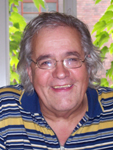 Jan
Verhaegh
Jan
Verhaegh2004-2010, ENUSP Deputy Board Member for the North West European Region
Princes Christinalaan 14
6301 VX Valkenburg aan de Geul
The Netherlands
Tel. +31 43 6013857
janverhaegh[at]xs4all.nl